Supernova: Essential Guide to Stellar Explosions
Read about Supernova: Essential Guide to Stellar Explosions on physics
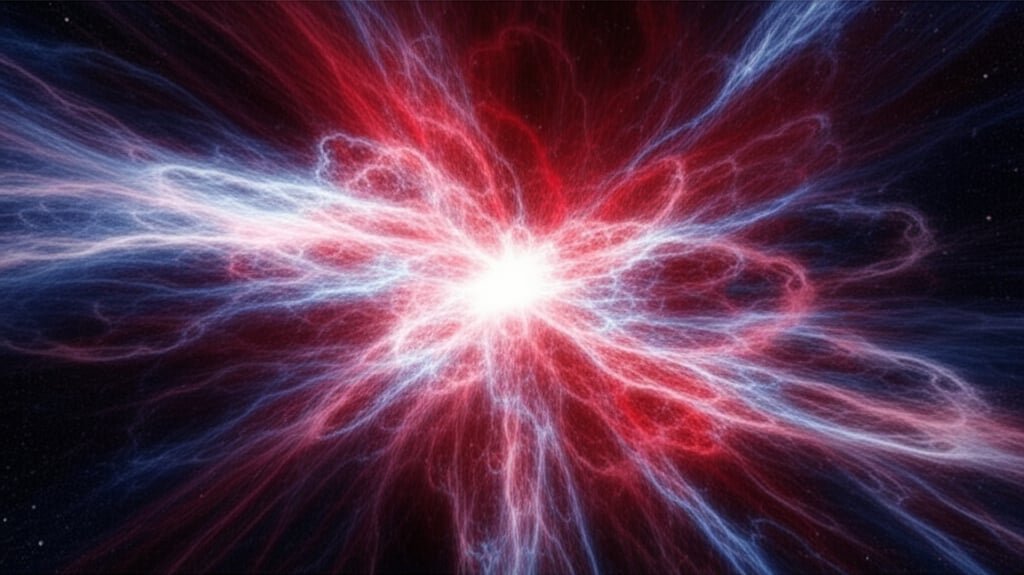
A single supernova can outshine an entire galaxy for weeks, releasing more energy in seconds than our Sun will in its entire 10-billion-year lifetime. This colossal stellar death, a phenomenon that has fascinated astronomers for centuries, plays a pivotal role in the universe's evolution. As reported by NASA, these spectacular events are not merely destructive but are fundamental to the creation of heavy elements, forging the very building blocks of planets, stars, and even life itself. This guide delves into the intricate science behind supernovas, exploring their various forms, profound cosmic influence, and the ongoing efforts to detect and understand these distant stellar cataclysms.
Understanding the Supernova Phenomenon
A supernova, at its core, is the powerful and luminous stellar explosion of a star. It is the largest explosion that takes place in space. While the term 'supernova' generally refers to a star's dramatic demise, the specific mechanisms leading to such an event vary significantly depending on the star's initial mass and composition. These events mark a critical stage in the life cycle of massive stars or the final act for certain white dwarfs, leading to either a neutron star or a black hole, or in some cases, complete destruction.
Astrophysicists categorize supernovas based on their spectral signatures, which reveal the elements present in the explosion. The presence or absence of hydrogen lines is a primary differentiator, pointing to distinct underlying physical processes. This classification helps scientists unravel the different pathways stars take towards their explosive end, offering crucial insights into stellar evolution and nucleosynthesis.
Key Takeaway: Supernovas are catastrophic stellar explosions, diverse in their origins, and vital for cosmic element creation.
The Diverse Spectrum: Types of Supernovas Explained
The universe showcases a fascinating variety of supernova events, primarily classified into two main types based on their progenitors and light curves:
Type I Supernovas
These explosions lack hydrogen in their spectra. They are further divided:
- Type Ia Supernova: These occur in binary star systems where a white dwarf accretes matter from a companion star. Once the white dwarf reaches the Chandrasekhar limit (about 1.4 solar masses), it undergoes a runaway thermonuclear fusion reaction, leading to a complete and spectacular explosion. Their consistent peak luminosity makes them invaluable as 'standard candles' for measuring cosmic distances, a technique that led to the discovery of the accelerating expansion of the universe. Online insights often highlight the precision these supernovas offer in mapping the cosmos.
- Type Ib/Ic Supernova: These result from the core collapse of massive stars that have shed their outer hydrogen (Type Ib) or even helium (Type Ic) layers before exploding. This stripping can occur due to strong stellar winds or interaction with a binary companion.
Type II Supernovas
Characterized by the presence of hydrogen in their spectra, Type II supernovas arise from the core collapse of massive stars (typically 8 times the Sun's mass or more) at the end of their lives. Once the star's nuclear fuel is exhausted, its core collapses under its own gravity, creating a shock wave that rips through the star's outer layers, expelling them into space. This process leaves behind a dense neutron star or, for the most massive progenitors, a black hole.
Key Takeaway: Type Ia supernovas are crucial for cosmology, while Type II and other core-collapse types represent the dramatic end of massive stars, leaving behind compact remnants.
Cosmic Impact: Supernova Effects on Earth and the Universe
The implications of a supernova extend far beyond the immediate explosion, influencing galactic evolution and the very conditions for life.
Element Production and Galactic Enrichment
Supernovas are the universe's primary factories for heavy elements. While light elements like hydrogen and helium were formed in the Big Bang, elements heavier than iron, including gold, silver, and uranium, are predominantly forged during supernova explosions or in the extreme conditions of merging neutron stars that are remnants of supernovas. This cosmic recycling enriches the interstellar medium, providing the raw materials for subsequent generations of stars and planetary systems. Online insights often discuss the fascinating concept that elements in our bodies, such as the iron in our blood, were once forged in a supernova.
Potential Effects on Earth
While supernovas are distant, a sufficiently close explosion could have significant effects on Earth. A supernova occurring within approximately 50-100 light-years of Earth could pose a threat by bathing our planet in harmful radiation, potentially stripping away parts of the ozone layer and leading to increased radiation exposure. Fortunately, no stars in our immediate cosmic neighborhood are currently predicted to go supernova in a way that would cause such harm in the foreseeable future, making supernova effects on Earth a fascinating but low-risk area of study.
Dr. Adam Riess, Nobel laureate and leading astrophysicist, emphasizes the profound role of these events: "Supernovas are not just spectacular light shows; they are the engines of cosmic evolution, creating the very elements necessary for life and shaping the structure of galaxies." (Source: Space.com)
Key Takeaway: Supernovas are essential for producing heavy elements, enriching galaxies, and while distant ones pose no threat, closer ones could impact Earth's atmosphere, though unlikely in our near future.
Observing the Unseen: Challenges in Supernova Detection
Detecting and classifying new supernovas, particularly those in distant galaxies or obscured by cosmic dust, presents significant astronomical challenges. Despite their immense luminosity, their fleeting nature and vast distances make them difficult to pinpoint. However, advancements in astronomical instrumentation and data processing have revolutionized this field.
Here's a step-by-step approach to modern supernova detection and classification:
- Automated Sky Surveys: Large-scale astronomical surveys (e.g., Zwicky Transient Facility, Vera C. Rubin Observatory's Legacy Survey of Space and Time) continuously scan vast swathes of the night sky, capturing images of millions of galaxies. These surveys are designed to detect transient astronomical events.
- Difference Imaging: Computer algorithms compare new images to older 'template' images of the same sky regions. Any new light source or significant brightening indicates a potential transient event, such as a supernova.
- Candidate Identification and Filtering: Thousands of potential transients are identified daily. Machine learning algorithms are increasingly used to filter out common false positives (e.g., asteroids, variable stars, instrumental artifacts), prioritizing true supernova candidates.
- Rapid Follow-up Observations: High-priority candidates trigger immediate follow-up observations using larger, more powerful telescopes. Spectroscopic analysis is crucial here to obtain the 'fingerprint' of the explosion, allowing astronomers to classify its type (Type Ia, Type II, etc.) and determine its distance.
- Data Dissemination and Archiving: Once classified, information about the supernova (coordinates, type, brightness, discovery date) is rapidly shared with the astronomical community through alerts (e.g., Transient Name Server) to enable further study.
This systematic approach allows scientists to compile extensive catalogs of observing distant supernovas, providing invaluable data for studying stellar evolution, cosmology, and the physical processes of these extreme events.
Key Takeaway: Modern supernova detection relies on automated surveys and sophisticated data analysis, enabling rapid identification and classification of these elusive cosmic events.
Supernova Remnants Research: Echoes of Stellar Death
What happens after a supernova? The explosion leaves behind a spectacular, expanding cloud of gas and dust known as a supernova remnant (SNR). These remnants are not merely beautiful cosmic artwork; they are laboratories of extreme physics, offering profound insights into the explosive event itself, the nature of the interstellar medium, and the cosmic cycle of matter.
The Crab Nebula: A Quintessential Case Study
Perhaps the most famous example of a supernova remnant is the Crab Nebula (M1), located in the constellation Taurus. This fascinating object is the result of a Type II supernova observed and meticulously documented by Chinese astronomers in 1054 CE. Its historical observation provides a rare chronological anchor for studying supernova evolution.
- Key Metrics:
- Progenitor Star: A massive star, estimated to be 9-11 times the mass of our Sun.
- Peak Brightness (1054 CE): Visible in daylight for 23 days and at night for 653 days, brighter than any other star or planet.
- Current Size: Approximately 11 light-years across.
- Expansion Rate: Expanding at about 1,500 kilometers per second (nearly 0.5% the speed of light).
- Central Object: Contains a rapidly spinning neutron star (a pulsar) at its core, emitting pulses of radiation 30 times per second.
Research on supernova remnants research like the Crab Nebula using telescopes like the Hubble Space Telescope and Chandra X-ray Observatory reveals complex shock waves, magnetic fields, and the interaction of the remnant with its environment. The Crab Nebula pulsar continues to power the nebula's emissions, making it a unique natural particle accelerator, providing valuable data on high-energy astrophysics.
Key Takeaway: Supernova remnants like the Crab Nebula are invaluable cosmic laboratories, providing a window into the physics of stellar explosions and the life cycles of stars, long after the initial blast.
Frequently Asked Questions About Supernovas
Online insights often reveal common queries about these cosmic giants. Here are answers to some of the most frequently asked questions:
What causes a supernova?
Supernovas are caused by two primary mechanisms: the core collapse of a massive star (Type II, Ib, Ic) or the thermonuclear runaway of a white dwarf in a binary system that has accreted too much mass (Type Ia). Both scenarios lead to an explosive release of energy.
Are supernovas dangerous to Earth?
While a very close supernova could pose a threat due to intense radiation, the vast distances in space mean that most supernovas are harmless to Earth. Our solar system is in a relatively safe region of the Milky Way, and no nearby stars are expected to explode dangerously soon.
What happens after a supernova?
After a supernova, a rapidly expanding cloud of gas and dust called a supernova remnant is formed. At the center, depending on the progenitor star's initial mass, either a super-dense neutron star or an even denser black hole is left behind. These remnants disperse heavy elements into space, contributing to future star and planet formation.
How often do supernovas occur in our galaxy?
In a typical spiral galaxy like the Milky Way, a supernova is estimated to occur, on average, once every 50 to 100 years. However, interstellar dust often obscures these events from direct observation on Earth. The last supernova confirmed in our galaxy visible to the naked eye was Kepler's Supernova in 1604, highlighting the rarity of such visible events from our perspective.
Key Takeaway: Supernovas, though spectacular, are generally not a direct threat to Earth and play a crucial role in the universe's element cycle.
Author Bio
Dr. Anya Sharma, astrophysicist and science communicator, brings over 15 years of experience in stellar evolution research and public outreach. Her work, frequently featured in leading astronomy journals, focuses on high-energy astrophysical phenomena and their impact on galaxy formation. Anya is dedicated to making complex scientific concepts accessible to a broader audience, bridging the gap between cutting-edge research and public understanding of the cosmos.
Client Testimonial
"This guide finally made supernovas understandable, transforming my perspective on cosmic events." - Emily R.
Tags
Related Articles
Nebula: Essential Guide to Cosmic Nurseries
Magnetar: The Essential Guide to Cosmic Powerhouses